

Promoting nature-positive development in Saint Lucia by integrating ecosystem services valuation and nature-based solutions in decision-making in the tourism, agri-food and urban sectors. This five-year project (2025-2030) 0focuses on reducing ecosystem degradation, fostering sustainable livelihoods, and enhancing climate resilience in the southwestern corridor, particularly the Districts of Laborie and Choiseul.
Ecosystem degradation poses a significant threat to Saint Lucia’s biodiversity and the livelihoods dependent on its natural resources. Unsustainable practices in key sectors, such as tourism, agriculture, and urban development, have led to deforestation, habitat loss, pollution, and declining soil health. With climate change further intensifying these challenges, it is crucial to integrate sustainable land and seascape management practices. By applying Nature-based Solutions (NbS) and valuing natural capital, the project aims to address these environmental, socio-economic, and climate-related challenges, ensuring a resilient and sustainable future for Saint Lucia’s key economic sectors.
About the Project
The project focuses on promoting sustainable development in Saint Lucia by integrating Nature-based Solutions (NbS) and ecosystem valuation into the tourism, agriculture, and urban sectors. It targets the Districts of Laborie and Choiseul which are home to diverse ecosystems such as rainforests, woodlands, gullies and coral reefs. Unplanned urban and commercial development, land-based pollution, unsustainable agricultural practices, and habitat degradation pose significant challenges to the region. The end goal is to reduce ecosystem degradation, enhance climate resilience and foster sustainable livelihoods, creating a model for nature-positive development which can be scaled across the island and other Small Island Developing States (SIDS).
The project is a national ‘Child Project’ of the GEF Blue and Green Islands Integrated Programme (BGI IP), which includes a collection of national projects in 15 participating SIDS across the globe. The United Nations Development Programme (UNDP) is the lead Implementing Agency of the BGI IP. Visit here for the UNDP BGI IP webpage. The overarching goal of the BGI IP is to reduce ecosystem degradation in small island developing states by applying nature-based solutions (NbS) and valuing natural capital to transform food, tourism, and urban sectors.
How will this project benefit the Caribbean region and contribute to global biodiversity goals?
The project will contribute to national commitments under the sub-regional St. George’s Declaration of Principles for Environmental Sustainability in the OECS (SGD), within the Biodiversity and Ecosystems Management Framework. It will also help Saint Lucia meet its obligations under the Cartagena Convention for the Protection and Development of the Marine Environment of the Wider Caribbean Region (WCR), particularly with respect to the Specially Protected Areas and Wildlife (SPAW) Protocol (ratified in May 2000) and the Land-based Sources (LBS) of Marine Pollution Protocol (ratified in January 2008). Additionally, it will contribute to Objectives 2 and 3 of the CARICOM Biodiversity Strategy and Action Plan.
This project also demonstrates alignment with global biodiversity and sustainable development goals as it directly supports the vision and goals of the Kunming-Montreal Global Biodiversity Framework, specifically contributing to:
- Target 2: Restore 30% of Degraded Ecosystems
- Target 3: Conserve 30% of Land, Waters and Seas
- Target 10: Enhance Biodiversity and Sustainability in Agriculture, Aquaculture, Fisheries and Forestry
- Target 11: Restore, Maintain and Enhance Nature’s Contributions to People
- Target 14: Integrate Biodiversity Decision-Making at Entry Level
- Target 21: Ensure That Knowledge Is Available and Accessible to Guide Biodiversity Action
- Target 22: Ensure Participation in Decision-Making and Access to Justice and Information Related to Biodiversity for all
- Target 23: Ensure Gender Equality and a Gender-Responsive Approach for Biodiversity Action
What activities are we undertaking?
Component 1: Leveraging Natural Capital Accounting (NCA), ecosystem service valuation (ESV) and scenario modelling to enable Nature-positive development in tourism, agri-food and urban sectors.
Outputs:
- Development of an incentive framework for nature-positive development and agriculture sectors and accompanying policy recommendations for upgrades of relevant fiscal incentive regimes.
- Suite of tailored gender-responsive capacity building events to demonstrate how to incorporate results from NbS scenario analysis and feasibility assessments into planning and incentive regimes.
- Strengthened multisectoral, coordination bodies to consider practical applications of ESV/ NCA and NbS in decision-making by the Development Control Authority with policy guidance of the Ministry of Finance.
- Developing a compendium of national and local area ecosystems at risk, critical ecosystems asset extent and condition accounts and recommend NbS based on pre-identified utilization categories (i.e. upland forests, agricultural productive areas, coastal natural areas and marine areas).
Component 2: Developing a national investment model for sustainable tourism development that balances costs and benefits to tourism, agriculture and urban sectors and leverages private sector investments.
Outputs:
- A gender-responsive Investment Model for sustainable tourism development that balances costs and benefits between tourism, agriculture and urban sectors and accounts for the value of natural capital assets and flow of ecosystem service benefits.
- Replicable Payment for Ecosystem Services (PES) model to incentivize downstream users to invest in incorporation of NbS into sustainable tourism investment planning to conserve upstream ecosystem benefits.
- Develop appropriate financial instrument for the PES scheme based on a hybrid model combining traditional lending criteria with ecosystem valuation and providing demonstration value to the existing national financing mechanisms.
Component 3: Direct landscape and seascape-level interventions and on-the-ground implementation of NbS.
Outputs:
- Declaration of the Dorée-Piaye Protected Landscape (DPPL) and restoration of 300ha of degraded agricultural areas across the Laborie and Choiseul landscapes to improve provision of cultural and regulating ecosystem services.
- Investment in sustainable agricultural production systems to support transition to more climate-resilient and environmentally sustainable practices through NbS (to reduce soil erosion, nutrient and agrochemical losses to the environment) and in tourism to enhance investments opportunities.
- Investments in tourism product-related landscape and trail augmentation and management incentivized through the proposed PES scheme to enhance tourism.
- Laborie Marine Management Area (LMMA) established and with legal, infrastructure, management and operational support.
Component 4: Knowledge Management and Communications.
Outputs:
- Knowledge Management and Communication Strategy implemented.
- Online knowledge hub on Nature-based Solutions.
- Gender-responsive Stakeholder Capacity Building Strategy implemented.
- Fora to showcase Nature-based Solutions and Sustainable Investments.
- ESV and NbS technical exchanges among Saint Lucian institutions with opportunities for participation by other SIDS.
Component 5: Monitoring and Evaluation (M&E).
Grievance Redress Mechanism / Stakeholder Response Mechanism (SRM)
If you have concerns regarding the implementation of the GEF-funded project, Valuing Nature and Nature-based Solutions for Sustainable Blue and Green Pathways for the Tourism, Food and Urban Sectors in Saint Lucia we encourage you to use our Grievance Mechanism or Stakeholder Response Mechanism (SRM). We are committed to transparency, and your feedback is vital for effective problem resolution. Our SRM offers a structured process for individuals and communities to voice their concerns. By using it, you can ensure that your issues are heard and addressed promptly.
Learn more about our Stakeholder Response Mechanism here: English – Saint Lucian Creole/Kwéyòl.
Recent project news and information
- Gender in Saint Lucia Factsheet (March 2026)
- Press release: CANARI launches landmarks Nature-based Solutions Project in Saint Lucia
- Newsletter article: Nature-based Solutions and Services: Ground-breaking project implemented in Saint Lucia
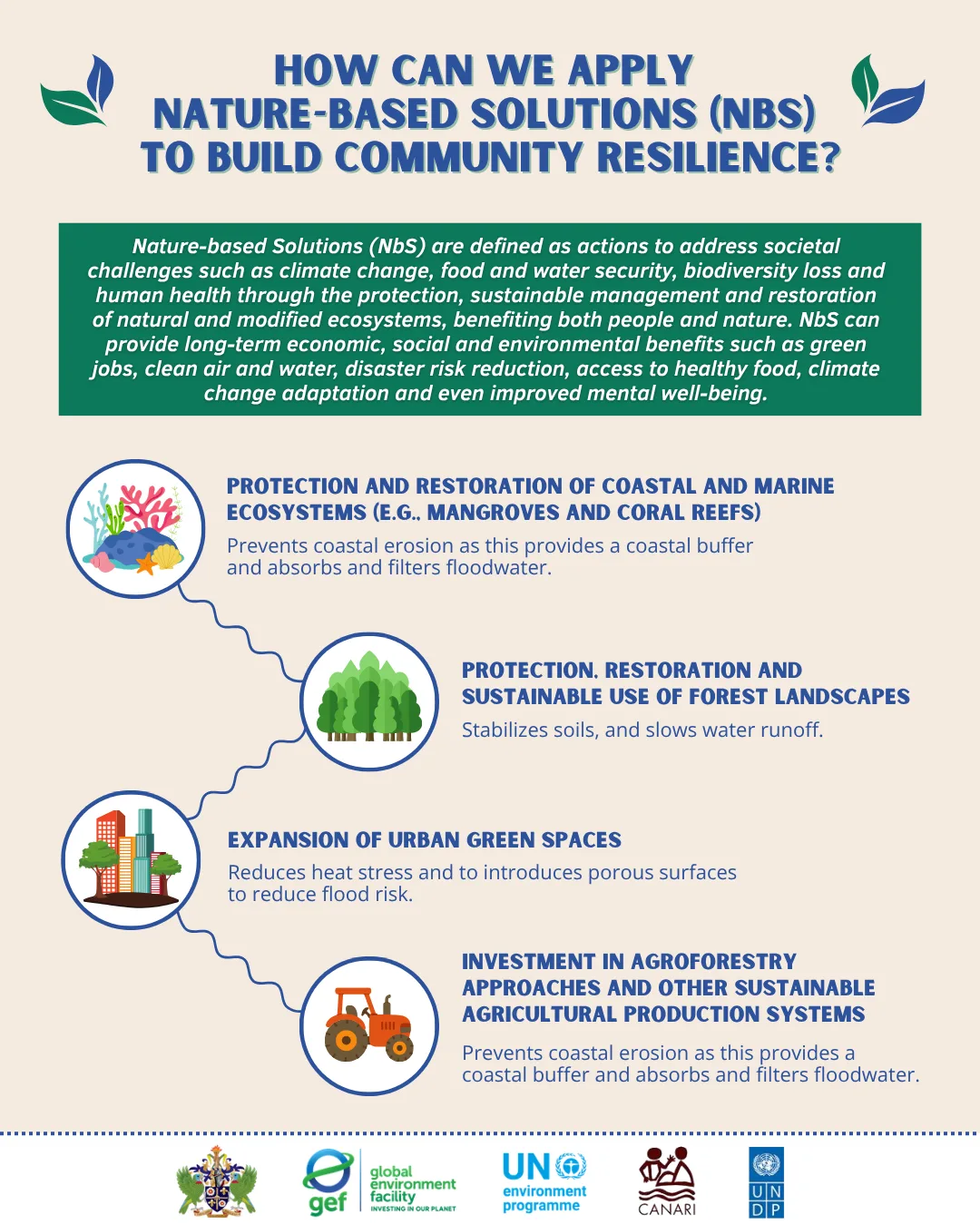
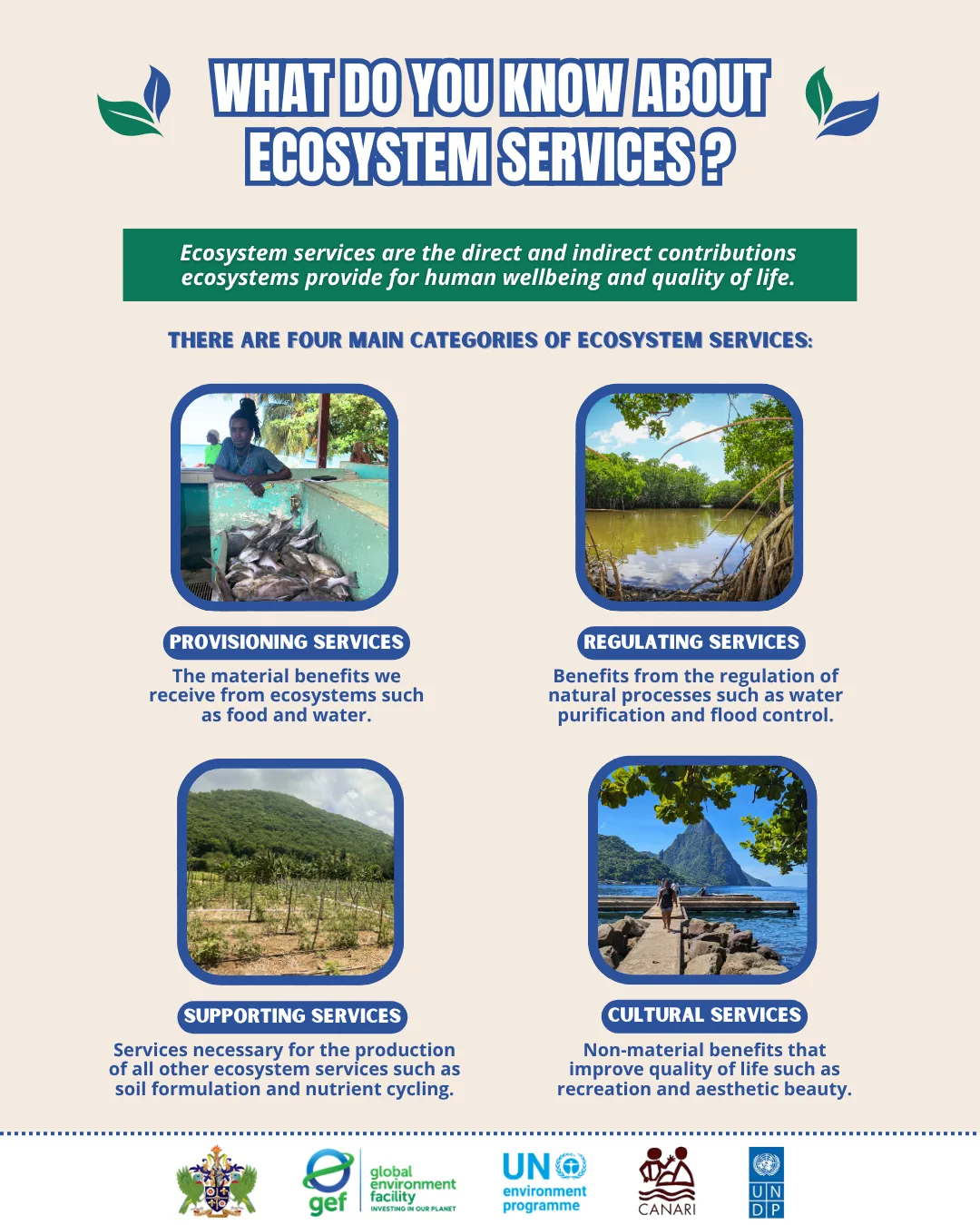
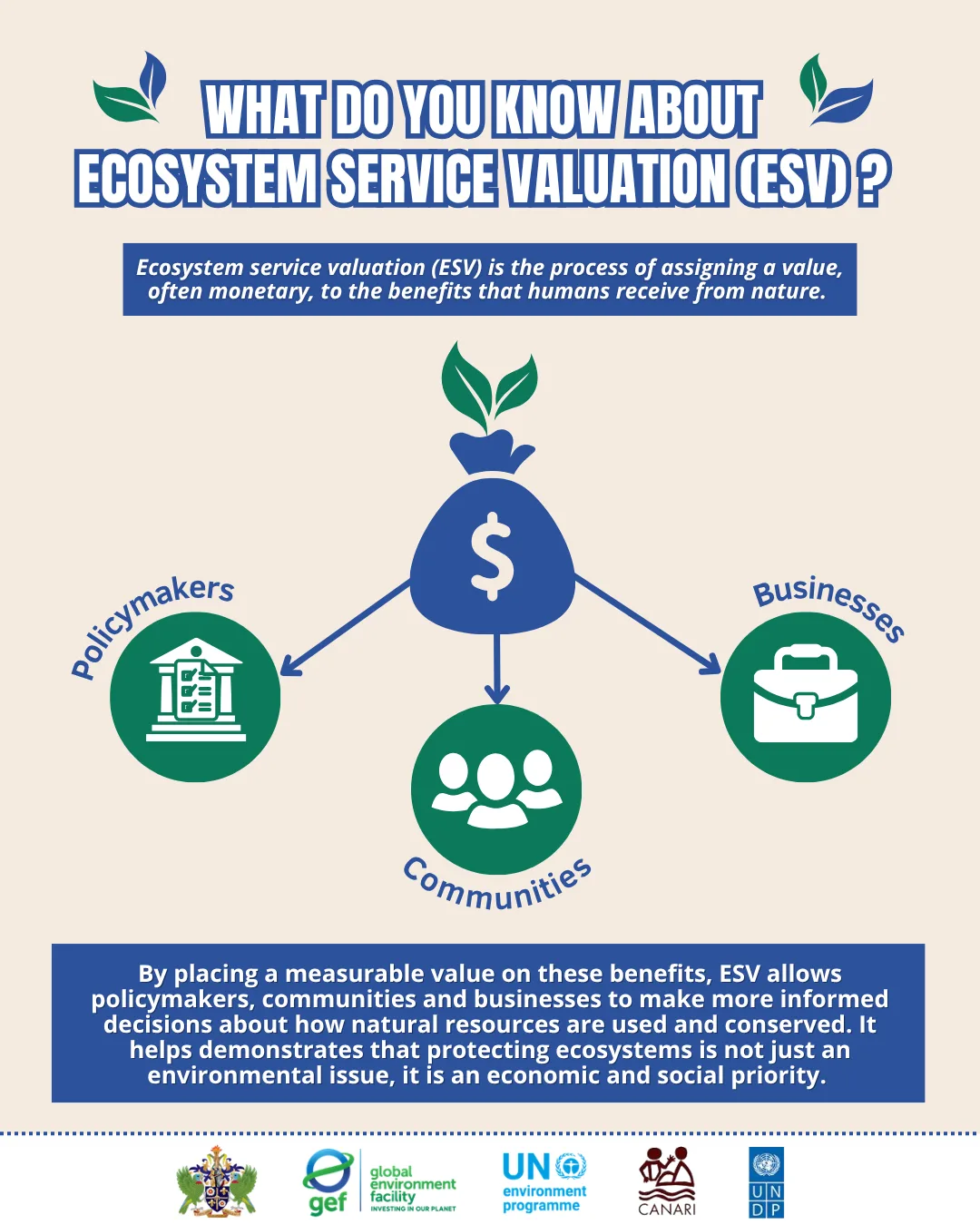
- Infographics: Nature-based Solutions; Ecosystem Services; Ecosystem Service Valuation
More information on this project
- Download the project brief in English or Saint Lucian Creole/Kwéyòl
- Contact Caroline Eugene, National Project Coordinator, at caroline@canari.org
Related projects and programmes
At-A-Glance
Aim:To remove technical, financial and policy bottlenecks to nature-positive development in Saint Lucia’s tourism, agri-food and urban sectors
Timeframe: July 2023-December 2024 (PPG Phase); May 2025 – March 2030 (Full project implementation)
Budget: US$3,585,334
Funded by:


Location: Saint Lucia
Key Project Partners:

Department of Sustainable Development (DSD), Government of Saint Lucia

Laborie Development Foundation (LDF)

Inter-American Institute for Cooperation on Agriculture (IICA)
Related Sustainable Development Goals (SDGs):
 |
 |
 |
Related CANARI Programme:
Related CANARI Flagship Areas:
- Nature-based solutions
- Local ecosystem stewardship
- Local green-blue enterprises